

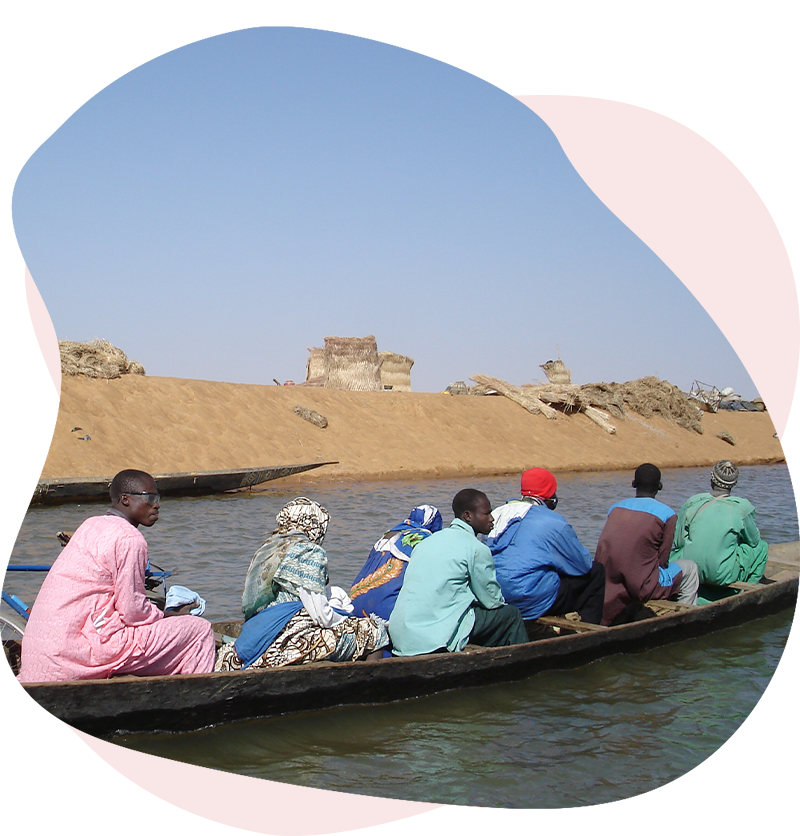
ADE contributes to devising ways to better understand and address the multiple dimensions of forced displacement as well as broader dynamics of mixed migration. Forced displacement profoundly affects the lives of individuals and communities who are compelled to flee armed conflict, persecution, or natural hazards, as well as the societies they leave behind and the communities that host them. In many settings, these impacts unfold alongside other forms of mobility, including movements driven by economic, environmental, or livelihood pressures, which shape broader patterns of human movement. Rigorous evaluations of policies, programmes, and interventions related to displacement such as those undertaken by ADE are essential to assess their effectiveness, relevance, and impact, and to strengthen evidence-based decision-making in complex and rapidly evolving displacement contexts.
Project examples
- UNHCR – Framework Contract for Emergency Response Evaluations
- UN OCHA – Framework Contract for Corporate Evaluations
- ICRC – Framework Contract for Evaluation Services
- UN WFP – Framework Contract for Centralized Evaluations (Strategic/Policy/Country-level)
- EU ECHO – Framework Contract for Strategic Evaluations
- EU ECHO – Evaluation of the EU humanitarian response to the Rohingya refugee crisis in Myanmar and Bangladesh (2021)
- EU NEAR/ENEST – Evaluation of the EU’s Facility for Refugees in Turkey (2025)
- UNHCR / DANIDA – Joint Evaluation of the Integrated Solutions Model in Kalobeyei, Kenya (2020)
- Enabel – Mid-term review of the “Project to Support the Reduction of Rural Emigration and Reintegration in the Groundnut Basin area” (PARERBA) in Senegal (2020)
- Most of our numerous humanitarian action evaluations included a displacement element, e.g. for WFP and DG ECHO – see our HA page.